

Planning an Indian Destination Wedding in Malaysia from Australia: A Practical Guide for Couples and Families

Planning an Indian wedding from Australia can feel like managing two celebrations at once: the wedding you want to create in Malaysia, and the travel, family decisions and logistics that need to come together from home. The good news is that a destination wedding does not need to mean making every decision in person. With a clear brief, realistic timeline and a reliable local event team, you can plan the celebration with confidence while keeping family involved.
For couples in Sydney, Melbourne, Brisbane, Perth and other Australian cities, Malaysia offers a choice of city hotels, coastal resorts, island settings and cooler highland venues. The right destination depends less on a picture-perfect backdrop and more on the guest experience, the type of ceremonies you want, the venue's Indian wedding capabilities and how easily your families can travel.
1. Start with the wedding you want to host, not just the venue

Before comparing venues, decide what the celebration needs to include. Is it a two-day gathering or a three- to four-day programme? Will you host a mehendi, haldi, sangeet, wedding ceremony and reception? Do you want all functions at one property, or would you prefer a city celebration followed by a smaller resort gathering? These decisions influence accommodation, production, transport, catering and the overall budget.
Set an approximate guest range and identify how many guests are travelling from Australia, India and elsewhere.
List the ceremonies and functions that matter to both families, including any religious or cultural requirements.
Decide whether a city hotel, coastal resort, island venue or highland setting suits your guests and preferred atmosphere.
Agree on the parts you want your planner to coordinate, such as event flow, décor, staging, sound, lighting and LED screens.
2. How to plan remotely from Australia
Remote planning works best when every decision is documented. Ask for a written proposal that separates venue costs from event planning, décor, catering, production, entertainment, accommodation and transport. Request current photographs and videos of the actual spaces, floor plans, capacities, wet-weather alternatives and a live video walkthrough where possible. A beautiful photograph is not enough: you need to know how the venue works for your guest count and each function.
Create one shared planning document for both families. Keep the guest list, room requirements, function timings, supplier decisions, approvals and payment milestones in one place. Agree on a regular video-call window that works for Australia and Malaysia, and nominate one decision-maker from each family so that approvals do not become scattered across multiple chats.
3. Make travel easier for guests coming from Australia
Do not assume every guest will depart from the same city or arrive on the same day. Collect each guest's departure city, likely arrival date, accessibility needs and accommodation preference early. Ask guests to check current airline schedules, baggage allowances, transit requirements and passport validity directly with their airline and the relevant government travel sources. Entry requirements depend on each traveller's passport and circumstances, so share official immigration information rather than relying on old group-chat advice.
For a multi-day wedding, consider a recommended arrival window before the first function and avoid scheduling the most important ceremony immediately after the earliest possible arrival. A guest information pack should include the venue address, airport transfer options, hotel check-in details, dress guidance, function timings, local weather expectations and a contact person for travel-day questions.
4. Build a budget in Australian dollars
When planning from Australia, compare proposals in a consistent currency. Ask suppliers to state whether quotations are in Malaysian ringgit, what taxes or service charges apply, how long the quotation remains valid and when exchange-rate exposure becomes your responsibility. Convert estimates into AUD using a dated exchange rate and refresh the calculation before major payments.
Venue hire and food and beverage for each function.
Accommodation, airport transfers and local transport, where included in your scope.
Décor, mandap, floral styling, stage, backdrop and furniture.
Sound, lighting, LED screens, technical crew, rehearsals and power requirements.
Photography, entertainment, permits or other venue-specific requirements, plus a contingency.
Avoid comparing a low headline package with a full-service proposal unless the inclusions are genuinely the same. Ask what is excluded, who manages suppliers on the day and what happens if the programme changes.
5. Plan for Malaysia's tropical conditions
Malaysia is warm and humid, and outdoor events need a proper weather plan. Ask the venue what indoor alternative is available, how quickly the event can move, whether covered guest circulation is possible and how sound, lighting and electrical equipment will be protected. Consider shade, hydration, footwear, guest comfort and the effect of humidity on flowers, makeup and attire. A good rain plan should be agreed before invitations are sent, not improvised on the wedding day.
Important: getting legally married in Malaysia
A wedding celebration and a legally registered marriage are not automatically the same thing. Before you book travel or announce a legal wedding date, decide whether you want the legal marriage to take place in Malaysia or whether you will complete the legal registration in your home country and hold a ceremonial celebration in Malaysia.
For non-Muslim couples seeking civil marriage registration in Malaysia, the National Registration Department (JPN) is the relevant authority. JPN's published guidance states that non-citizen applicants must reside in Malaysia for seven consecutive days and may submit their application on the eighth day. The notice period is displayed for 21 days plus one day, and the solemnisation date is subject to completion of the notice period and JPN availability. JPN may require passports, proof of marital status, birth certificates, photographs and other supporting documents depending on the case. Do not assume a short wedding trip is enough to complete civil registration.
Muslim marriages follow procedures set by the relevant state Islamic religious authorities. Requirements and application processes differ by state, and permission must be obtained before solemnisation. Couples should contact the relevant authority directly.
Official starting points: JPN civil marriage guidance: https://www.jpn.gov.my/en/services/marriage/registration-of-marriage-in-malaysia-for-non-muslim-applicants-without-licence/ and Malaysian Government marriage procedures: https://www.malaysia.gov.my/en/categories/family-institution/marriage-of-non-muslim-couples and https://www.malaysia.gov.my/en/topics/marriage-procedures-for-muslim-couples. Also check with your country's embassy, consulate or civil registry about recognition and documents required when marrying abroad. This is general planning information, not legal advice; requirements can change and your circumstances may affect the process.
6. How GRE can help bring the celebration together
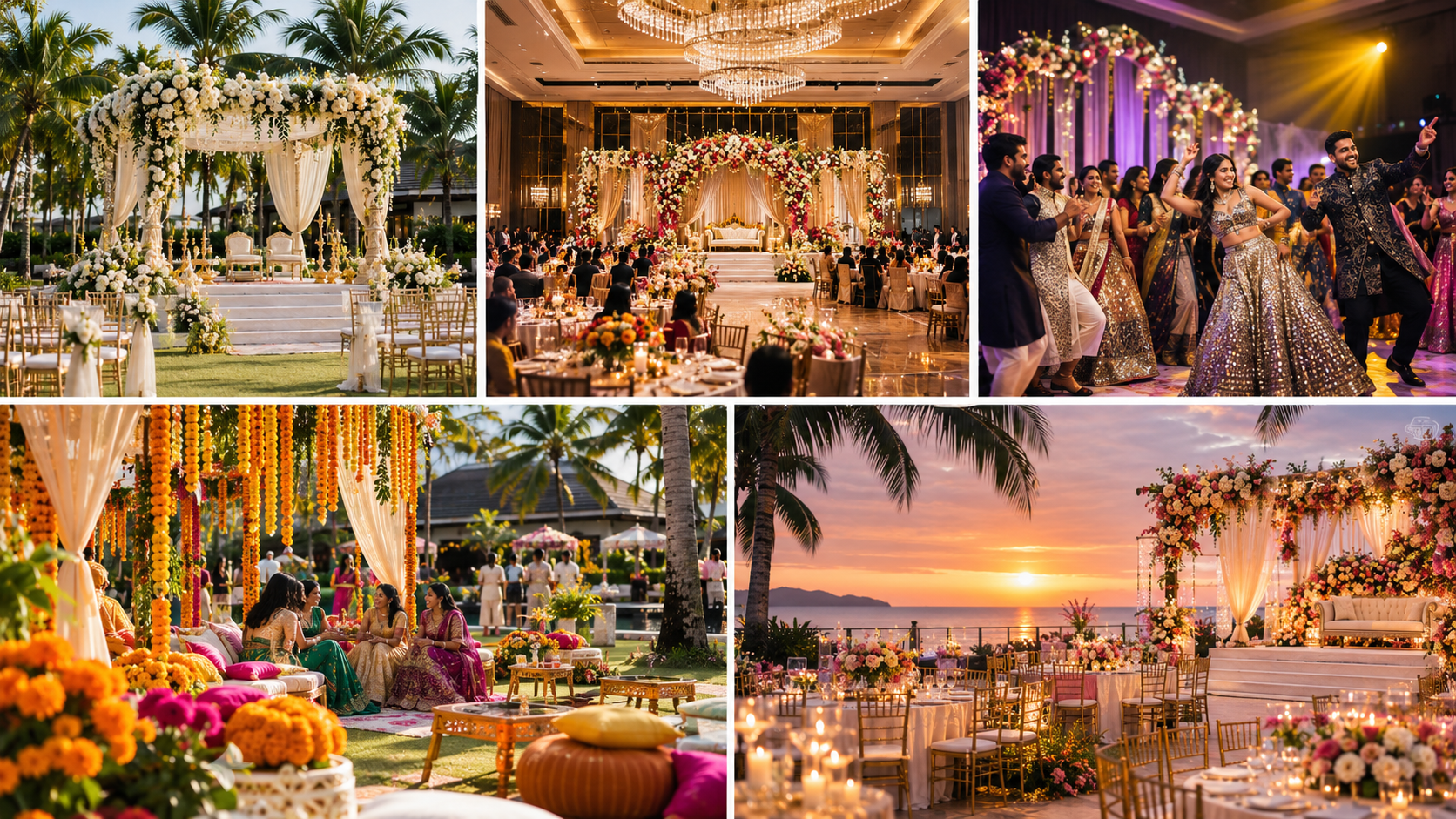
Gouden Riche Events is based in Malaysia and can discuss the local event-planning and production elements of your celebration. Depending on the agreed scope, this can include coordinating the event programme, décor and wedding setup, stage and backdrop requirements, sound, lighting, LED screens, technical support and on-the-ground event execution. We can help you turn a broad idea into a practical brief that your venue and suppliers can work from.
If you are planning from Australia, start with your preferred dates, estimated guest count, the number of functions and the style of venue you have in mind. The more clearly we understand your celebration, the more useful the first discussion can be.
Frequently asked questions
Can we plan our Malaysian wedding without visiting first?
You can complete much of the early planning remotely through video calls, venue walkthroughs, photographs, floor plans and written proposals. If possible, a site visit before final confirmation is helpful, but it is not the only way to begin planning.
How many days should we allow for an Indian destination wedding?
That depends on the number of ceremonies, guest travel and whether you want a relaxed family itinerary. Build the schedule around the functions that matter rather than adding events simply to fill days.
Can GRE handle the legal marriage registration?
GRE can help identify the planning questions that need to be addressed, but legal eligibility and registration must be confirmed directly with JPN or the relevant state authority. Do not treat an event-planning quotation as legal confirmation.
Start planning your Indian wedding in Malaysia
Share your dates, guest estimate, preferred setting and wedding functions with Gouden Riche Events. Explore our destination wedding information at https://www.goudenricheevents.com/destination-wedding or contact our team at https://www.goudenricheevents.com/contact.


Comments